Hedge Trimming in Carshalton
Hedge trimming in Carshalton should keep boundaries tidy, protect plant health and shape growth so gardens stay manageable through the seasons. We focus on careful cutting for domestic and light commercial settings, with attention to the species in front of us, the finish you want and the practical limits of the site. Whether the hedge is formal, informal, tall, narrow or overgrown, the aim is a cleaner line and a healthier framework.
Our hedge trimming service is built around clean, controlled work rather than rough reduction. That means taking away soft growth where it is needed, preserving a sensible outline and avoiding unnecessary strain on the plant. We can also help with edging, light reshaping and seasonal tidying so hedges keep their structure without looking heavily cut back.
If you would like to compare options or plan the work around other garden jobs, have a look at our services overview. For a quotation, keep it simple: tell us the hedge type, roughly how long or high it is, and whether clippings need taking away. We can then respond with a clearer idea of the work involved.
Regular hedge care for neat, controlled growth

Most hedges benefit from regular attention rather than an occasional hard cut. Routine trimming helps maintain density, keeps the top from spreading too wide and reduces the chance of bare lower stems on species that respond well to frequent shaping. We work with hedges that need standard maintenance cuts as well as those that have run on a little and now need more careful attention to bring the outline back under control.
Good hedge care is not only about appearance. A hedge that is trimmed sensibly can let in light to the lower growth, remain easier to manage and stay within the boundary you want. We take a measured approach to each job, adjusting the cut to the hedge’s current condition rather than forcing every plant into the same finish. That matters on mixed boundaries where one section may be vigorous and another section slower-growing or more shaded.
Where the hedge forms a front boundary, side screen or dividing line within a garden, a tidy finish often depends on consistency across the whole run. Small variations in cutting height or width can stand out, especially on hedges that are seen every day from windows, drives or patios. A steady, even pass gives the hedge a more deliberate look and makes later maintenance simpler.
Shaping, reduction and selective cutting
Some hedges need more than a routine trim. They may have grown beyond their intended line, lost shape after a period without maintenance or developed uneven sections where one side has pushed ahead of the rest. In those cases, the work may involve selective reduction, careful re-profiling or staged cutting so the hedge can be improved without removing more than is sensible in a single visit.
Garden maintenance can sit well alongside hedge work when the broader boundary needs attention too. Trimming is often most effective when the surrounding area is also kept clear, because access improves and the finished hedge is easier to see and assess. That can include light tidying beneath the hedge, clearing away loose cuttings and making sure adjoining beds or paths are left in a presentable state.
Not every hedge should be cut back aggressively. Some shrubs and evergreens respond better to lighter, repeated trimming; others can take a firmer reduction if the timing and condition are right. The practical decision depends on the hedge’s growth habit, how long it has been left and how much change is reasonable for the plant. A careful plan is usually better than trying to solve everything in one pass. The right finish should look deliberate, not forced.
Access, height and site considerations
Hedge trimming often depends on safe access more than the cutting itself. Long runs, awkward corners, sloping ground and boundaries that sit close to fences, sheds or paths all affect the way the work is carried out. We look at the hedge line, the available standing space and the condition of nearby surfaces before starting, so the trim can be completed with as little disruption as practical.
Very tall hedges or dense growth can need additional time because the upper sections are harder to reach and the cuttings can be more substantial. In some cases, the finish may be better achieved with a staged approach rather than a heavy one-off reduction. Where a hedge is tightly enclosed, the work may also involve more careful collection of debris and more detailed attention to the final edges so the boundary does not look ragged after cutting.
To help us quote accurately, it is useful to know the approximate hedge length, the highest point and whether access is straightforward from one side or both. A short note about nearby features can also help, especially if there are gates, parked vehicles, narrow side passages or delicate planting close to the hedge. Contact us when you are ready and we can discuss the next step.
Clipping removal and clean finish

A professional hedge trim should leave the boundary looking cared for, not simply cut. The clean-up stage matters because clippings can collect in lawns, beds, gutters, path edges and the base of the hedge itself. We aim to leave the area neat after the work, removing loose cuttings where agreed and making sure the finished line can be seen properly from all the main viewpoints.
If the hedge borders a driveway or path, the clean-up can be just as important as the cut. Loose debris can make a surface slippery or untidy, and freshly cut material can blow into flower beds if it is left in place. Where disposal is needed, it is useful to mention this when asking for a quotation so the full scope of the task can be reflected accurately. That way, the work and the finish are planned together rather than treated as separate surprises.
Garden clearance can be helpful when the hedge job is part of a broader tidy-up and there is more than just clippings to move. In some gardens, old trimmings, brash or accumulated plant waste may already be present before the hedge is cut, so a fuller clearance approach makes the result feel complete. It also helps the hedge stand out properly once the surrounding clutter is gone.
About Carshalton
Carshalton is a historic area in the London Borough of Sutton, in south-west London, known for its village-like character, water features and a strong sense of local heritage. The area centres on a traditional high street and a cluster of older buildings around Carshalton Ponds, where the River Wandle emerges into a series of ponds and channels. The landscape here has long been shaped by water, milling and settlement, and that history still gives the place a distinctive feel compared with more densely built parts of outer London. One of the best-known historic buildings is St Mary’s Church, whose churchyard and surrounding setting contribute to the area’s older village appearance. Nearby, Honeywood Museum occupies a former 17th-century house and offers a local historical focus, while The Grove provides a well-used green space close to the centre. Carshalton Beeches and Carshalton on the Hill reflect the wider spread of the name across different parts of the district, each with its own streets and residential character. The area also connects with green corridors and suburban streets that give way to parks, gardens and school grounds, so the local environment blends urban convenience with pockets of calm. That combination of water, heritage and greenery has helped keep Carshalton recognisably distinct within Sutton.
Hedge work alongside wider garden upkeep
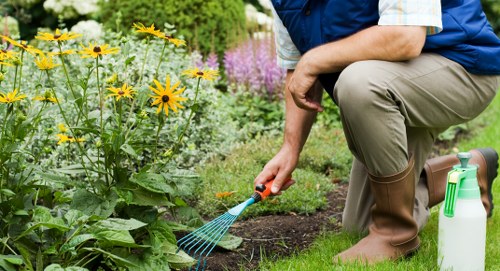
Hedges often sit within a wider pattern of garden care, so it can be sensible to think about the boundary and the rest of the space together. If the hedge is trimmed but the surrounding planting, lawn edges and paths are left untidy, the overall effect is less balanced. We can coordinate hedge cutting with other practical garden tasks where needed, keeping the work focused on a clear finish rather than splitting simple jobs into separate visits.
Lawn mowing is a natural companion to hedge trimming when the garden has become uneven in more than one area. A crisp hedge line usually looks better against an even lawn edge, especially where the hedge casts shade or marks the end of a run of grass. In that situation, the visual balance of the whole garden benefits from both areas being considered together, rather than treating the hedge as an isolated feature.
Before booking, it helps to think about the result you want: a tidy maintenance trim, a neater profile, or a more substantial correction to restore order after a period of growth. Different hedge types respond in different ways, and the most appropriate cut is not always the heaviest one. If you are ready to discuss your hedge, request a quotation and we will take the details from there.
Formal and informal hedge finishes
Some hedges are expected to look sharply defined, with straight sides and a level top that reinforces the shape of the boundary. Others are better kept in a softer, less rigid form that suits cottage-style planting or mixed garden design. We can trim with either look in mind, provided the hedge and the site suit the approach. The key is to preserve the intended character of the planting while keeping it practical to maintain.
Formality matters because hedge style affects how the garden reads from the house and from outside. A disciplined cut can make a frontage feel ordered and well kept, while a looser finish may be more appropriate behind a property or around more natural planting schemes. Where the hedge is used as a screen, we can also work to maintain useful privacy without making the top so broad that it becomes harder to manage later.
For hedges that sit beside steps, driveways or front boundaries, it is sensible to pay attention to clean edges and safe lines of sight. Slightly overhanging growth can make a route feel narrower or less welcoming. A carefully trimmed boundary improves access and helps the garden present better as a whole, especially where visitors see the hedge before they see anything else.
What affects the quotation
Pricing for hedge trimming usually depends on the hedge’s size, density, accessibility and the amount of waste produced. A short, easily reached hedge is a very different job from a long, mature boundary with awkward access or a lot of cut material to remove. The species and current condition also matter, because a hedge that needs a simple maintenance cut will take less work than one requiring more detailed reshaping or reduction.
It can be helpful to give a straightforward description of the hedge when asking for a quote. Approximate length, usual height and whether the hedge stands on one side or both are all practical details. If you already know whether you want clippings taken away, include that too. This keeps the quotation grounded in the actual job rather than broad assumptions, and it reduces the chance of missing important work later.
Clear information at the start often makes the process smoother. If the hedge is part of a boundary shared with a neighbour or close to a public-facing frontage, mention that as well so the access and cutting plan can be considered properly. A concise enquiry is usually enough to begin. See pricing and quotes if you want to understand how a quotation request can be framed.
Trimming for seasonal upkeep and long-term shape
Different hedges need attention at different times of year, but the general principle is the same: maintain shape before the growth becomes difficult to correct. Seasonal trimming keeps hedges from spreading too far, helps maintain a steady outline and reduces the sense that the boundary has taken over the garden. We work with the hedge’s condition in mind, aiming for a finish that supports future upkeep rather than making the next visit harder.
Long-term shape is especially important on hedges that are part of the garden’s structure. They may frame a path, define a seating area or separate one section of the plot from another. In those cases, the trim is not just a tidy-up; it is part of keeping the whole layout legible. A good hedge line supports the rest of the garden by keeping edges disciplined and proportions sensible.
If you are not sure whether your hedge needs routine trimming or a more considered reshaping, a few simple details can help us assess the likely approach. The more the hedge has grown out of line, the more useful it is to describe the problem rather than just asking for it to be shortened. When you are ready, send the details for a quotation and we can discuss the most suitable next step.
Supporting services for larger garden jobs
Hedge trimming often forms part of a broader set of garden improvements, especially where the boundary, lawn and planting have all drifted out of line at once. In those cases, related services can make the overall finish more consistent. We can work as part of a wider plan that focuses on tidiness, structure and manageable upkeep rather than a one-off cosmetic change.
Landscape gardening may be relevant if the hedge is being altered as part of a wider redesign or rebalancing of the garden layout. A hedge sometimes needs to sit within a different planting scheme, a new boundary line or a refreshed approach to access and screening. Where that is the case, the hedge work needs to fit the larger picture rather than being treated as a separate afterthought.
Decking services can also matter where a hedge borders a sitting area, raised platform or newly defined outdoor space. If the hedge frames a deck, the final line needs to sit comfortably with the hard landscaping around it, so the garden feels coherent rather than pieced together. Good trimming supports that balance by keeping the boundary in proportion to the rest of the setting.
Further garden and tree considerations
Although hedge trimming is the main focus here, gardens often need several kinds of attention to feel properly ordered. Trees close to hedge lines can throw shade, compete for space or influence how a boundary grows. Where that is part of the wider picture, it is useful to consider the hedge work alongside any other growth that affects light, access or available room along the boundary.
Tree lopping and removal may be relevant when a tree is crowding a hedge or making the line difficult to maintain. In some gardens, the hedge itself is in reasonable condition but nearby tree growth is creating the impression that the whole edge is untidy. Addressing the tree side of the boundary can make future hedge trimming more straightforward and help the garden read as a single, managed space.
About us gives a simple outline of the business behind the service if you would like to see the broader company information. Even so, the main point remains the same: a well-cut hedge should suit the space, respect the plant and leave the boundary looking deliberate. If you want to move ahead, request a quotation and we will look at the details with you.